December 29, 2025
Kirsten Quinn
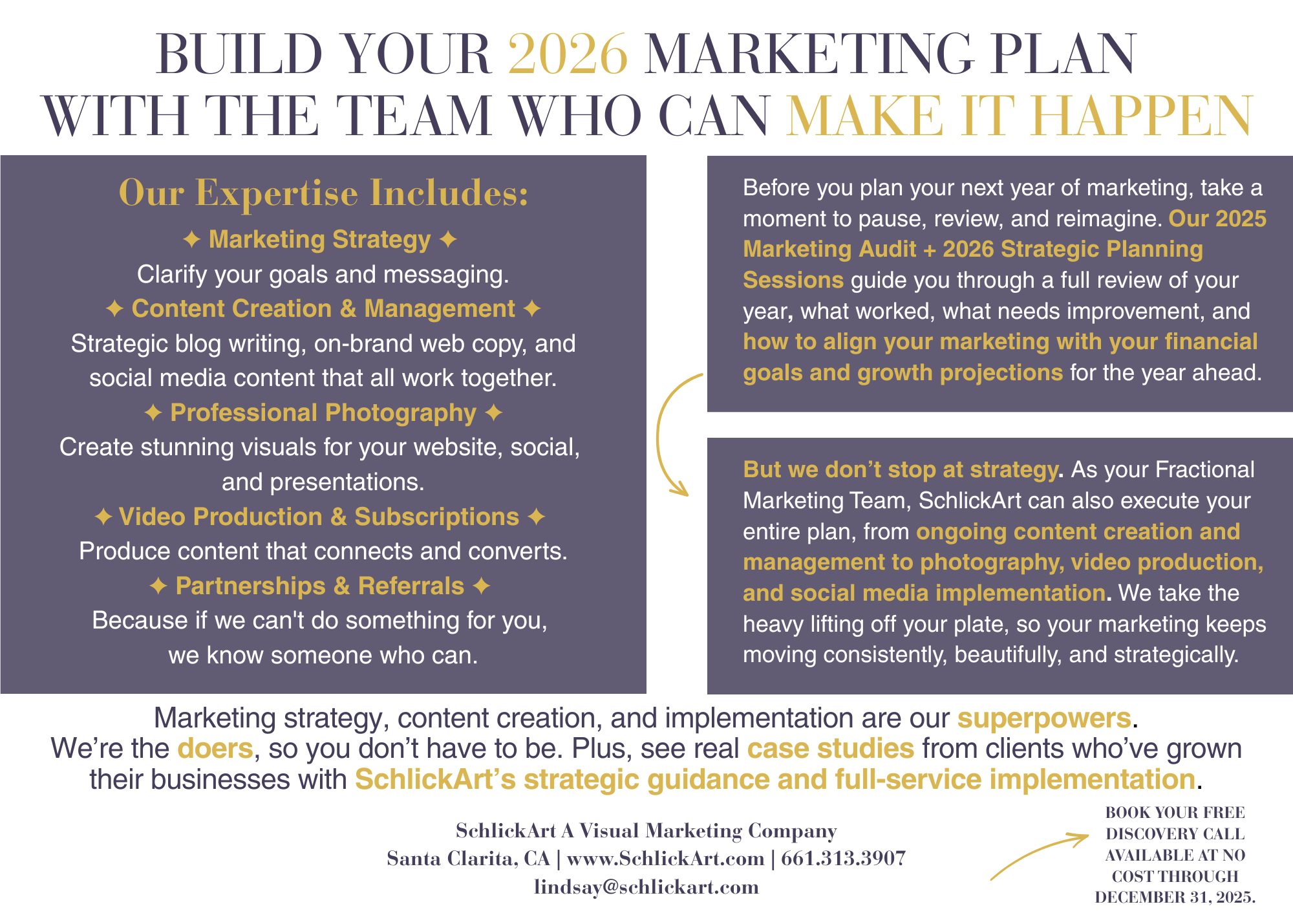
Discover 15 real strategies we used to provide marketing support for small businesses — and how they can simplify your 2026 strategy, too.
The most meaningful progress we saw in 2025 didn’t come from quick wins or one-off projects. It came from steady, intentional work—the kind that quietly moved things forward, week after week.
These weren’t just services. They were patterns. Moments that showed up again and again when businesses were ready to grow, simplify, and build something that actually lasts.
Seen together, they tell a clearer story about what works—and what makes marketing feel more manageable.
What follows are 15 patterns we saw across our client work in 2025—each one rooted in real experiences that are shaping how we’re showing up for businesses in 2026.
1. Consistency Was the Real Struggle (Not Creativity)
 Strategic Planning Sessions
One of the biggest misconceptions we saw in 2025 was that businesses lacked creativity. In reality, our clients had plenty of ideas—they just didn’t have a clear plan for what came first, what mattered most, or how everything fit together.
Our clients were creative, thoughtful and invested in their marketing. What they needed was space to slow down and decide what actually mattered first.
Strategic planning sessions gave them that clarity. Instead of reacting to every new idea or platform, they had a plan they could return to.
Once the plan was in place, consistency stopped feeling forced. Decisions became easier. Content felt intentional. Marketing became something they could actually sustain.
2. Marketing Worked Better When Support Didn’t End After the Plan
Another clear pattern: strategy alone wasn’t enough.
The biggest shifts happened when someone stayed involved at the strategic level—helping clients execute, adjust and keep momentum when business inevitably got busy.
Through our fractional marketing services, we acted as a fractional marketing team, supporting the work beyond the initial plan. For these clients, marketing stopped feeling like a solo responsibility. It became a shared effort—and that made all the difference.
3. Most Marketing Didn’t Need Reinvention—It Needed Clarity
Before creating anything new, many clients needed a clearer view of what they already had.
Marketing audits helped identify what was working, what was outdated, and what was quietly causing friction. More often than not, this process brought relief. Clients realized they weren’t starting from zero.
That clarity made it easier to move forward with confidence and intention, instead of second-guessing every decision.
4. Momentum Came From Knowing What Was Coming Next
 Marketing Roadmaps
Once clients had clarity, the next challenge was staying out of reaction mode.
Marketing roadmaps helped translate big-picture goals into realistic next steps. Instead of asking, “What should we do this month?” clients had a longer view of what they were building toward.
That vision created momentum. It reduced decision fatigue and turned marketing support for small businesses into something long-term and intentional—not reactive.
5. Writing Got Easier When No One Had to Start From a Blank Page
In 2025, we saw how much simpler marketing became when content started in the right place—and for many clients, blog writing was a surprisingly easy place to begin.
Instead of treating it like a separate task, we used the blog as a foundation. It helped clarify messaging, improve SEO, and create consistent language that could be repurposed into newsletters, social posts and more.
With a strong blog in place, the entire team had something to work from. No more blank pages. No more “I don’t know what to write.” Just a system that made content feel easier to create—and easier to sustain.
6. Email Built Connection—Not Just Clicks
Last year, the best newsletters weren’t the flashiest. They were the most human.
Our clients saw the biggest impact when they used email to build relationships. Newsletters became a place to share stories, communicate values, and remind their audience there were real people behind the brand—people who care, who show up, and who have something meaningful to say.
Instead of waiting to send an email until they had “news,” they created a consistent rhythm of connection. That shift made it easier to stay top-of-mind, deepen trust, and build loyalty over time.
Because when email feels personal, it doesn’t just get opened—it gets remembered.
7. SEO Was Strongest When It Supported Real Content
In 2025, we saw how well SEO could work when it was integrated—not isolated.
Rather than treating SEO as a separate checklist, we used it to quietly strengthen the content our clients were already creating. Blogs, videos and visuals were crafted with connection in mind first—and then supported with smart, organic SEO strategies that helped that content reach more of the right people.
It didn’t require big changes. Just thoughtful tweaks—like adjusting titles, adding keywords, or embedding metadata—that gave meaningful content a longer shelf life.
In the end, SEO wasn’t the goal. It was the added momentum behind a strategy built to last.
8. Social Media Felt Lighter When It Was Planned
Social Media Creation & Posting
Social media started feeling lighter—not because clients had less to say, but because they didn’t have to do it all themselves.
We helped take social off their plate—creating posts, handling scheduling, and tying each piece back to a bigger plan. That consistency made a big difference, but even more than that, it gave clients breathing room.
They could finally show up online without the pressure of scrambling or second-guessing. Social became part of the rhythm—not another thing they had to keep up with.
9. Photography Changed How Confident Clients Felt Showing Up
 Marketing Photography
Intentional photography did more than refresh visuals—it changed how clients saw themselves.
In 2025, marketing photography helped clients feel aligned with their brand and more confident sharing their work publicly. When images reflected who they actually were, showing up online felt easier and more natural.
That confidence carried through everything else.
10. Visual Consistency Reduced Friction Everywhere Else
In 2025, group shot graphics gave clients a polished way to showcase their team—without stressing about turnover.
One professional image created visual consistency across platforms, even as teams grew or shifted. It became a go-to brand asset that saved time, looked sharp, and made every post feel more put-together.
Simple to create. Easy to update. Always on-brand.
11. Video Worked When Clients Felt Guided, Not Scripted
The most effective videos were the ones created with a clear purpose—and built to do more than one job.
Clients came to us with all kinds of needs: marketing, internal communications, team onboarding, recruitment, and more. And time after time, we saw how one thoughtfully produced video could support multiple goals.
Mission Valley Bank created a video to share the story of their company’s growth internally, with new team members. But that same piece could be repurposed into short-form content, used for client education, or shared online to reinforce their brand message.
That’s the power of strategic video—it doesn’t just deliver a message. It becomes a flexible, lasting tool for your business.
12. Reels Helped Brands Stay Visible Without Overthinking
Short-form video worked best when it was rooted in strategy—but flexible enough to play.
Our clients didn’t need to be trend-driven to succeed. They had a strong foundation of intentional, on-brand content—and that’s what made room for the occasional trendy reel to shine.
Used strategically, trends became visibility boosters—not distractions. Just one high-performing reel could drive traffic, build brand recognition, and spark new interest—without ever compromising professionalism or values.
13. Visual Content Performed Better When the Details Were Handled
Visual Content Metadata Optimization
Photos and videos don’t just need to look good—they need to be findable, too.
While clients focused on showing up authentically on camera, we handled the behind-the-scenes work that made those visuals easier to discover. Simple details like filenames, alt text, and metadata helped each image or video reach more of the right people—without creating anything new.
Most people overlook this part. But it’s what gives your visuals staying power—and makes sure your content doesn’t disappear in the scroll.
14. Strategy Created Breathing Room for Business Owners
Ongoing strategy wasn’t about constant change—it was about steady guidance.
Clients who had someone thinking ahead with them experienced less stress and less second-guessing. Marketing decisions felt more grounded when they weren’t made in isolation.
That kind of marketing support for small businesses created space to focus on the bigger picture: growth, development, and long-term sustainability.
15. The Biggest Wins Came From Long-Term Partnership
 Your Fractional Marketing Team
The most meaningful progress we saw in 2025 didn’t come from one-off projects.
It came from relationships.
When marketing became a shared responsibility—supported by your fractional marketing team—clients gained consistency, clarity and confidence over time. Marketing stopped feeling like something they had to manage alone.
And that’s where real momentum happened.
Leveling Up In 2026
These weren’t just services we offered. They were patterns we saw again and again—clear signs that marketing feels better when you’re supported in the right ways.
As we head into 2026, we’re continuing that same work — marketing support for small businesses — and we’re ready to bring it to businesses who want their marketing to feel clearer, calmer, and more sustainable.
If you’re thinking about what you want your marketing to feel like next year, we’d love to be part of that conversation.
Marketing Strategy With SchlickArt
At SchlickArt, we believe the best marketing strategies start with real conversations, honest goals and a deep understanding of your unique business. That’s why our approach to strategy goes far beyond spreadsheets and surface-level planning. We take the time to get to know you—your story, your values and the vision driving your work—so we can craft a plan that not only performs but feels right every step of the way.
Whether you’re scaling your business, launching a new offer or simply ready to take the guesswork out of your content, our strategy services are designed to bring clarity, purpose and momentum to your marketing. From high-level consulting and quarterly planning sessions to detailed content calendars and brand messaging, we offer tailored support that meets you where you are—and grows with you.
If you’re looking for marketing support for your small business in 2026, we’d love to help you build something that actually feels manageable—and works. From strategy to content to execution, our approach is personal, consistent, and tailored to what your business really needs to grow with clarity and confidence.
About SchlickArt
SchlickArt, a luxury visual marketing company based in Santa Clarita, started in March 2012 with the simple idea that empowerment creates a kind of authenticity that shines through every camera lens. Built on a philosophy–rather than a product, service or person–SchlickArt has rapidly evolved, meeting fractional CMO, business and strategy planning, professional portraiture, business photo and business video needs as diverse as the community we capture. It’s the desire to take care of you, the client, that drives us at SchlickArt.





Share
Recent Posts
 02.24.26
How To Identify Your Revenue-Aligned Client (Before Creating Content)
Learn how to define your revenue-aligned client before creating content, so your marketing supports your financial goals—not just visibility. There’s a moment that happens after you finally sit down and define real revenue goals. You feel clear. Focused. Maybe even a little proud. The number is no longer vague.…- 02.17.26
The Subtle Difference Between Reactive and Proactive Marketing
The difference between staying visible and driving growth is subtle. We’re breaking down reactive vs proactive marketing—and how to tell the difference. January always feels powerful. You sit down with your team. You map out goals. There’s a fresh notebook. A new planner. A clean content calendar. Revenue targets… - 02.10.26
When the Jack-of-All-Trades Marketer Needs a Team
What an SNL luge skit accidentally gets right about modern marketing—and the plight of the Jack-of-All-Trades Marketer A couple weeks ago, we were on the couch watching SNL when Jane Wickline’s Winter Olympics promo sketch nearly took us out—the kind of laugh where you instinctively set your wine down before… - 02.03.26
Play, Don’t Prove: How to Build Brand Credibility People Lean Into
What happens when marketing stops performing? A story about how to build brand credibility people trust. For eight years, we did what good marketers are supposed to do. We taught. We wrote blog after blog sharing everything we knew—from how to feel comfortable in front of the camera, to… - 01.20.26
Rebuilding LEGO: The Brand Strategy That Fueled a Remarkable Comeback
How did LEGO pull off its comeback? This case study breaks down the brand strategy that fueled its turnaround. It’s hard to imagine now, but in the early 2000s, LEGO was quietly unraveling. Not in a dramatic, headline-grabbing way. No single scandal. No sudden collapse. Just a slow, expensive… - 01.19.26
Why Marketing Plans Fail: When Opinions Outweigh Execution
Too often, here’s why marketing plans fail: opinions outweigh execution. Discover why marketing strategy execution breaks down—and how to finally turn ideas into results. Most people don’t speak up because they want to slow things down. They speak up because they care. Opinions usually come from experience, concern, or…